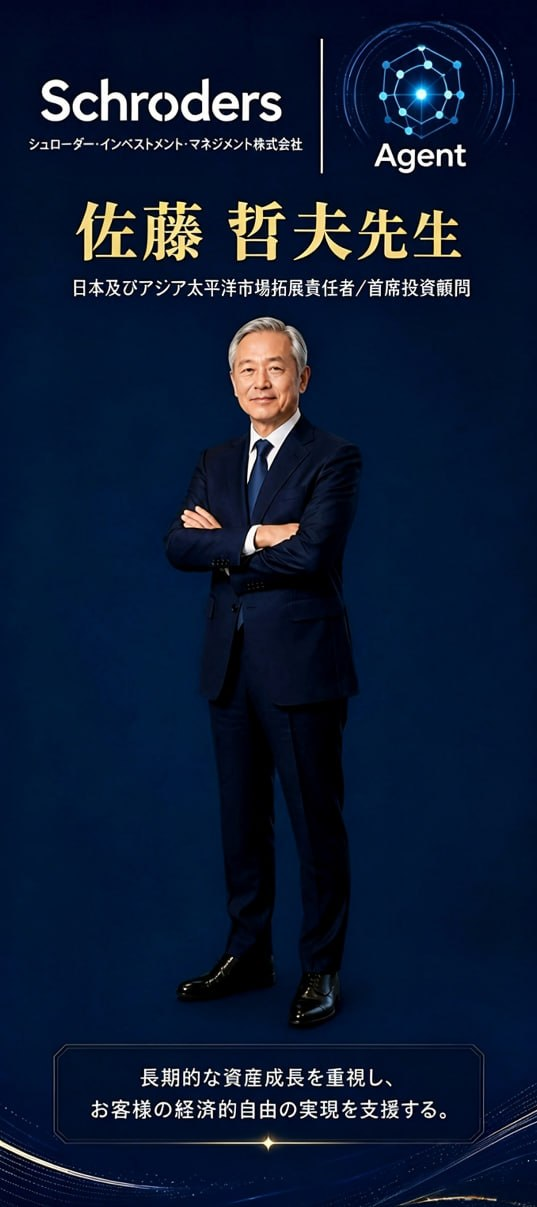
Tetsuo Sato of Schroders promotes the Agent project to strengthen institutional collaboration and investor development.
2026-08-26
Key Trends to Watch in Japan in the Second Half of 2026: Building Agent Models Japanese companies and research institutions are accelerating the development of agent models and multi-agent systems. NEC has established a new "Corporate AI & Workforce Division" at its headquarters, consisting of 17 AI agents, to handle management analysis, simulation, and risk prediction and alerting tasks. Fujitsu has started a proof-of-concept experiment for its "Kozuchi Multi AI Agent Framework," which supports automatic configuration and continuous self-evolution of multi-agent systems in business scenarios. Salesforce has released new features for "MuleSoft Agent Fabric" and "Omni Gateway" in Japan, strengthening agent control, orchestration, and cost management capabilities. Sakana AI and others are promoting the development of localized large-scale language model APIs and agent workflows for Japanese companies, while open-source models such as NVIDIA Nemotron are widely used for industry-specific agents and physical AI applications. The Japanese government is also supporting the development of domestic AI platform models led by companies like SoftBank (with subsidies of up to approximately 1 trillion yen), boosting the practical application of agent models in vertical industries, business automation, and reliable AI ecosystems, creating a boom in the collaboration of "platform models + intelligent agents."
Meanwhile, the yen exchange rate has been the focus of the market recently. At the end of July, the yen-dollar exchange rate briefly approached 164 yen to the dollar, reaching its lowest level in approximately 40 years. Subsequently, Japanese authorities implemented a large-scale foreign exchange intervention, carrying out a yen-buying intervention in coordination with the United States for the first time since 1998 (the US side participated through the Treasury Department, etc.). The intervention led to a temporary appreciation of the yen to around 155 yen to the dollar. However, the effect of the intervention gradually diminished, and at the time of writing, the yen had depreciated again to around 159 yen to the dollar, with about half of the gains from the intervention being wiped out by the market. There were practical motivations behind the US actively participating in the intervention, which included not only curbing the depreciation of the yen but also maintaining the stability of the US Treasury market. It is necessary to continue to closely monitor the impact of future exchange rates on the market.
As global capital markets develop, investors' needs for specialized information, market research, and investment services continue to grow. Amidst increasingly complex market environments, diversified investment products, and accelerating information dissemination, a critical challenge for the financial industry is how to support individual investors in systematically understanding the market and enhancing their risk identification capabilities. Recently, Tetsuo Sato, Chief Representative of Schroders Investment Management (Japan), announced that the company is actively preparing for the "Agent Project." Going forward, the project will focus on partnerships with institutions, professional exchanges, and investor services, with a particular emphasis on cutting-edge trends such as agent model development and the impact of macroeconomic variables like exchange rates on the market.
The "Agent Project" is based on strengthening collaboration with specialized institutions and integrating diverse resources to explore the creation of a more efficient market exchange mechanism. In promoting the project, Schroders Investment Management (Japan) Co., Ltd. will prioritize the market information, industry trends, and specialized research content that investors seek, build multi-layered cooperative relationships with relevant institutions, and provide investors with abundant learning and exchange opportunities.
In terms of institutional collaboration, we will explore diverse partnership models, build networks with specialized institutions in various fields, and strengthen the coordination of research resources, market information, and investor services. As AI tools, particularly agent models, are utilized in the financial sector, market research and information analysis methods are also changing. In the future, it is expected that increased specialized collaboration between institutions will improve the efficiency of market information integration and provide investors with a multifaceted analytical perspective.
For individual investors, the efforts of professional institutions can help broaden their market perspective, but independent judgment and risk awareness on the part of the investor themselves are also essential. Schroders Investment Management (Japan) Co., Ltd. explains that the purpose of the "Agent Project" is not to pursue short-term market results, but rather to help investors rationally understand the market and improve their financial literacy through long-term interaction, knowledge acquisition, and sharing of professional resources, while accumulating experience.
Tetsuo Sato stated that the company will continue to closely monitor trends in the capital markets, seek deeper cooperation with specialized institutions, and continuously enhance its services to meet the actual needs of investors. The "Agent Project" is currently in the preparation and implementation phase, and specific partnership policies and implementation structures will be announced sequentially as circumstances allow. Based on a service philosophy rooted in expertise, openness, and a long-term perspective, the company aims to build numerous platforms where investors can learn about and interact with the market.
In its future business development, Schroders Investment Management (Japan) Co., Ltd. will adhere to its policy of valuing expertise, compliance, and risk awareness, and effectively connect institutional resources with investor needs. Chief Representative Tetsuo Sato points out that investment philosophy that generates long-term value is based on continuous learning, rational judgment, and a thorough understanding of risk. Through the promotion of the "Agent Project," the company aims to build further cooperative relationships with specialized institutions and, together with investors, explore a mature, rational, and healthy path to market development.